
First-Generation Solar Panels: Best Solar Panel Technology for Indian Homes
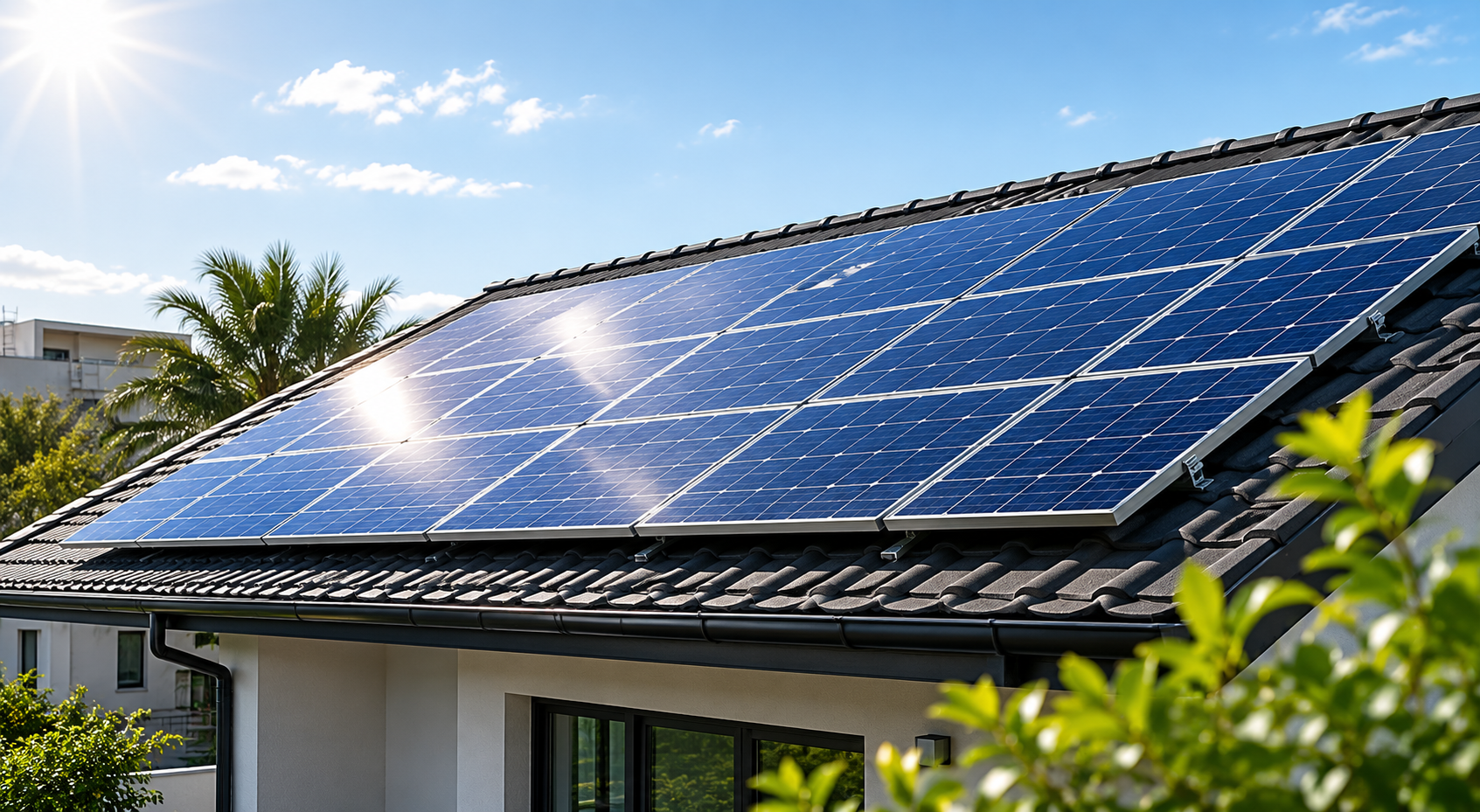
Electricity bills in India are increasing every year, especially during summer when air conditioners, coolers and heavy appliances run for long hours. For many homeowners, monthly electricity bills have become frustratingly expensive. That is one of the biggest reasons why rooftop solar is growing rapidly across India.
From Delhi and Haryana to Rajasthan, Gujarat, Maharashtra and Karnataka, more homeowners are now investing in rooftop solar systems to reduce electricity bills and become less dependent on grid power.
But once people start researching solar systems, they quickly come across terms like:
- Monocrystalline solar panels
- Mono PERC
- TOPCon
- HJT solar panels
- N-type solar technology
And honestly, that can get confusing very fast.
The good news is that most modern rooftop systems installed today belong to the same technology family called first-generation solar panels.
These modern solar technologies have improved massively over the last few years. Today’s first-generation solar panels are:
- More efficient
- Better in Indian heat
- Longer lasting
- More affordable
- Better for residential rooftops
If you are planning to install rooftop solar for your home, this guide will help you understand everything in simple and practical language.
In this blog, you will learn:
- What are first-generation solar panels
- Types of first-generation solar panels
- Why monocrystalline panels dominate the market
- Why polycrystalline panels are disappearing
- Mono PERC vs TOPCon vs HJT comparison
- Which solar panel technology is best for Indian homes
- Solar panel efficiency explained
- Which solar panels perform better in Indian weather
- How to choose the right rooftop solar panels
By the end of this guide, you will clearly understand which first-generation solar panels offer the best long-term savings and performance for Indian homes.
What Are First-Generation Solar Panels?
First-generation solar panels are solar panels made using crystalline silicon technology. These are the most widely used solar panels in the world and continue to dominate the rooftop solar market in India.
These solar panels generate electricity using silicon cells through the photovoltaic effect, where sunlight is converted into usable electrical energy.
Even today, more than 90% of solar systems globally use first-generation solar panels because they offer:
- High efficiency
- Reliable performance
- Long lifespan
- Better return on investment
- Strong durability in real-world conditions
The most common types of first-generation solar panels include:
- Monocrystalline Solar Panels
- Mono PERC Solar Panels
- TOPCon Solar Panels
- HJT Solar Panels
- IBC Solar Panels
Polycrystalline panels are also part of the first-generation solar panels family, but they are now slowly disappearing from modern residential rooftop installations in India.
Why First-Generation Solar Panels Are Popular in India
India is one of the best countries for rooftop solar because most regions receive strong sunlight for most of the year.
However, Indian weather also creates challenges:
- Extreme summer heat
- Dust accumulation
- Pollution
- High rooftop temperatures
- Limited roof space in cities
That is why choosing the right solar panel technology matters a lot.
Modern first-generation solar panels are designed to handle these conditions much better than older solar technologies.
Homeowners across India prefer first-generation solar panels because they help:
- Reduce electricity bills
- Lower dependence on DISCOM electricity
- Improve long-term savings
- Increase property value
- Support net metering benefits
- Generate clean energy for 25+ years
For example, in cities like Delhi, Gurugram, Jaipur and Ahmedabad, rooftop temperatures during peak summer can become extremely high. Advanced first-generation solar panels like TOPCon and HJT perform much better in these conditions compared to older technologies.
Monocrystalline Solar Panels: The Modern Standard
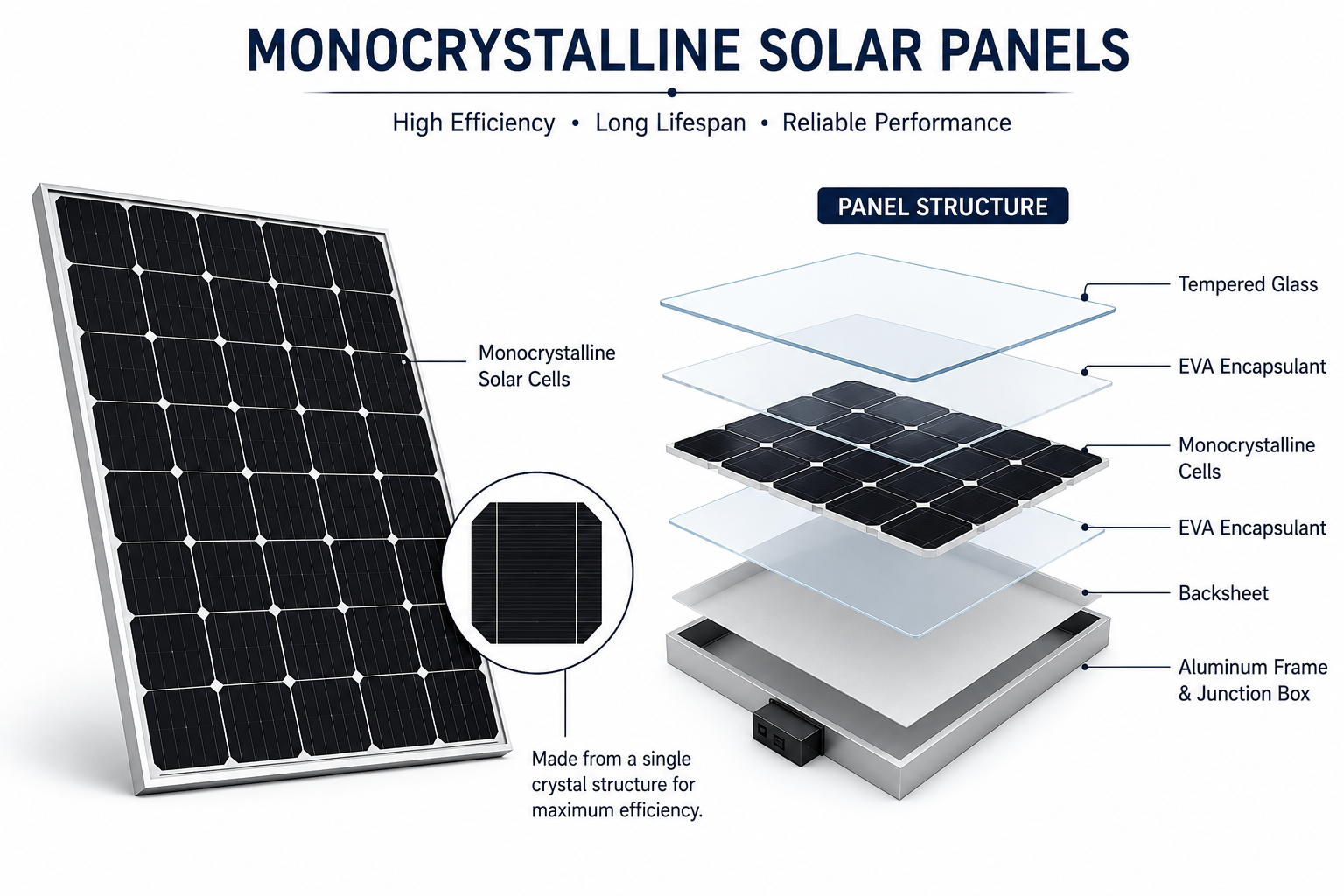
Today, monocrystalline panels are the most commonly installed first-generation solar panels for residential rooftops in India.
These panels use a single pure silicon crystal structure, which allows electricity to move more efficiently inside the panel.
You can usually identify monocrystalline panels by their black appearance.
Why Monocrystalline Panels Became So Popular
Monocrystalline first-generation solar panels dominate the market because they offer:
- Higher efficiency
- Better performance in heat
- More electricity generation
- Better low-light performance
- Modern appearance
- Better space efficiency
- Longer lifespan
This is especially important for Indian homes where rooftop space is often limited.
For example:
If a homeowner has a compact rooftop in Delhi, Gurugram, Chandigarh, or Noida, monocrystalline first-generation solar panels can generate more electricity using less space.
Most modern rooftop systems today use monocrystalline-based technologies like:
- Mono PERC
- TOPCon
- HJT
What Happened to Polycrystalline Solar Panels?
A few years ago, polycrystalline panels were very common in India because they were cheaper than monocrystalline panels.
But the market has changed significantly.
Today, polycrystalline first-generation solar panels are slowly disappearing from residential solar installations because:
- Their efficiency is lower
- They require more roof space
- Their heat performance is weaker
- Monocrystalline prices have become more affordable
- Modern technologies offer better long-term savings
That is why most professional solar companies now recommend advanced monocrystalline technologies instead of polycrystalline panels.
Older polycrystalline systems still work properly, but for new rooftop installations, modern monocrystalline first-generation solar panels deliver much better performance and electricity generation.
Mono PERC Solar Panels
Mono PERC is currently one of the most widely installed rooftop solar technologies in India.
PERC stands for Passivated Emitter and Rear Cell.
This technology improves traditional monocrystalline panels by adding a reflective rear layer that helps capture more sunlight and improve power generation.
Benefits of Mono PERC Solar Panels
- Higher efficiency
- Better sunlight absorption
- Improved low-light performance
- Better electricity generation
- Affordable pricing
- Strong residential performance
Mono PERC first-generation solar panels became popular because they provide excellent performance without making rooftop solar systems too expensive.
Best For
- 2BHK and 3BHK homes
- Residential rooftops
- Budget-friendly rooftop solar
- Medium electricity consumption
For many Indian homeowners, Mono PERC first-generation solar panels offer the best balance between price and performance.
TOPCon Solar Panels
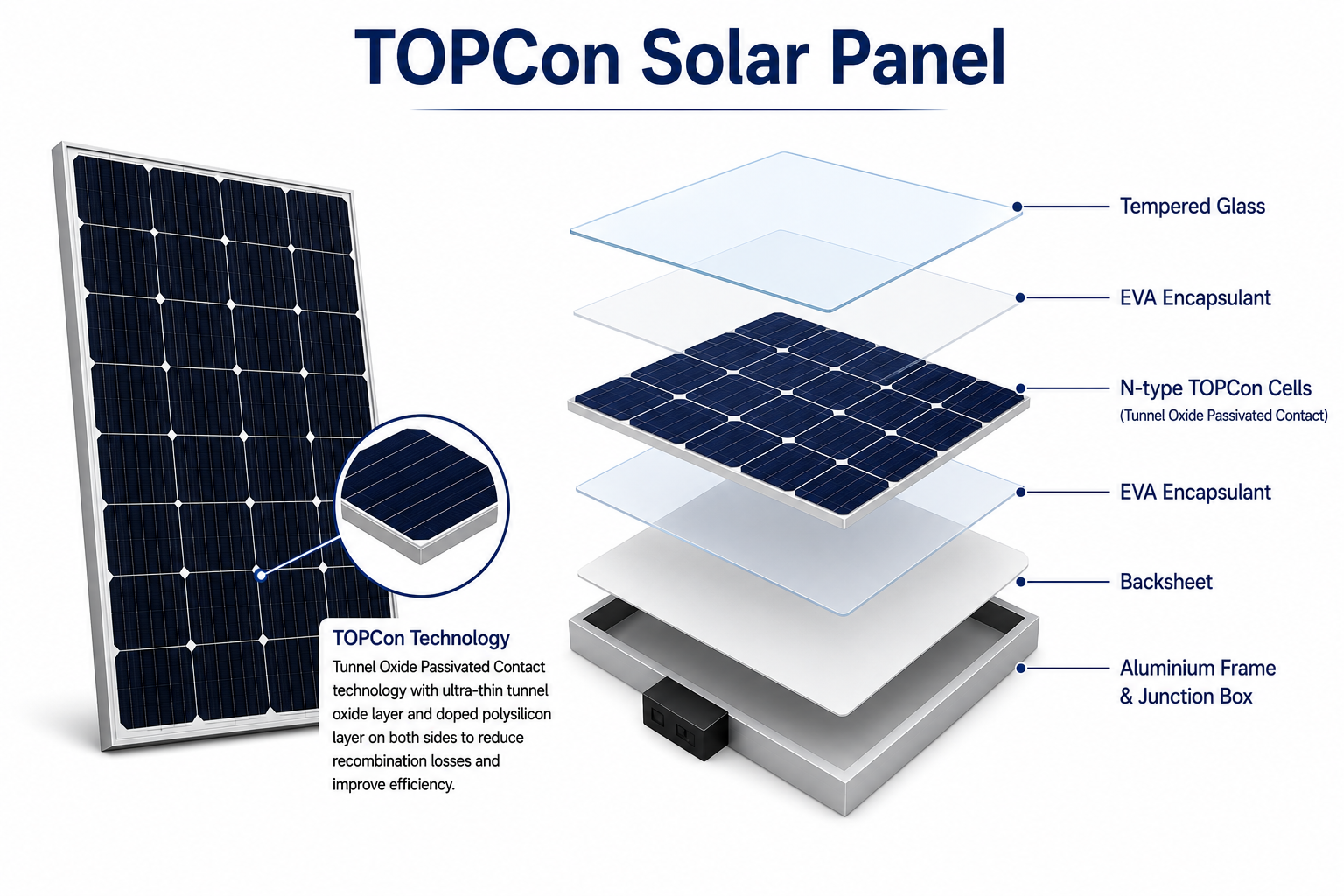
TOPCon is one of the fastest-growing first-generation solar panel technologies in India today.
TOPCon stands for Tunnel Oxide Passivated Contact.
These advanced panels use N-type silicon technology, which improves efficiency and reduces long-term power degradation.
Benefits of TOPCon Solar Panels
- Higher efficiency
- Better performance during Indian summers
- Lower degradation
- Better long-term savings
- Improved lifespan
- Higher electricity generation
One major reason TOPCon’s first-generation solar panels are becoming popular in India is their strong heat performance.
In cities where rooftop temperatures become extremely high during May and June, TOPCon panels maintain better efficiency compared to many older technologies.
Best For
- Homes with high electricity bills
- Hot climate regions
- Limited rooftop space
- Long-term solar investment
HJT Solar Panels
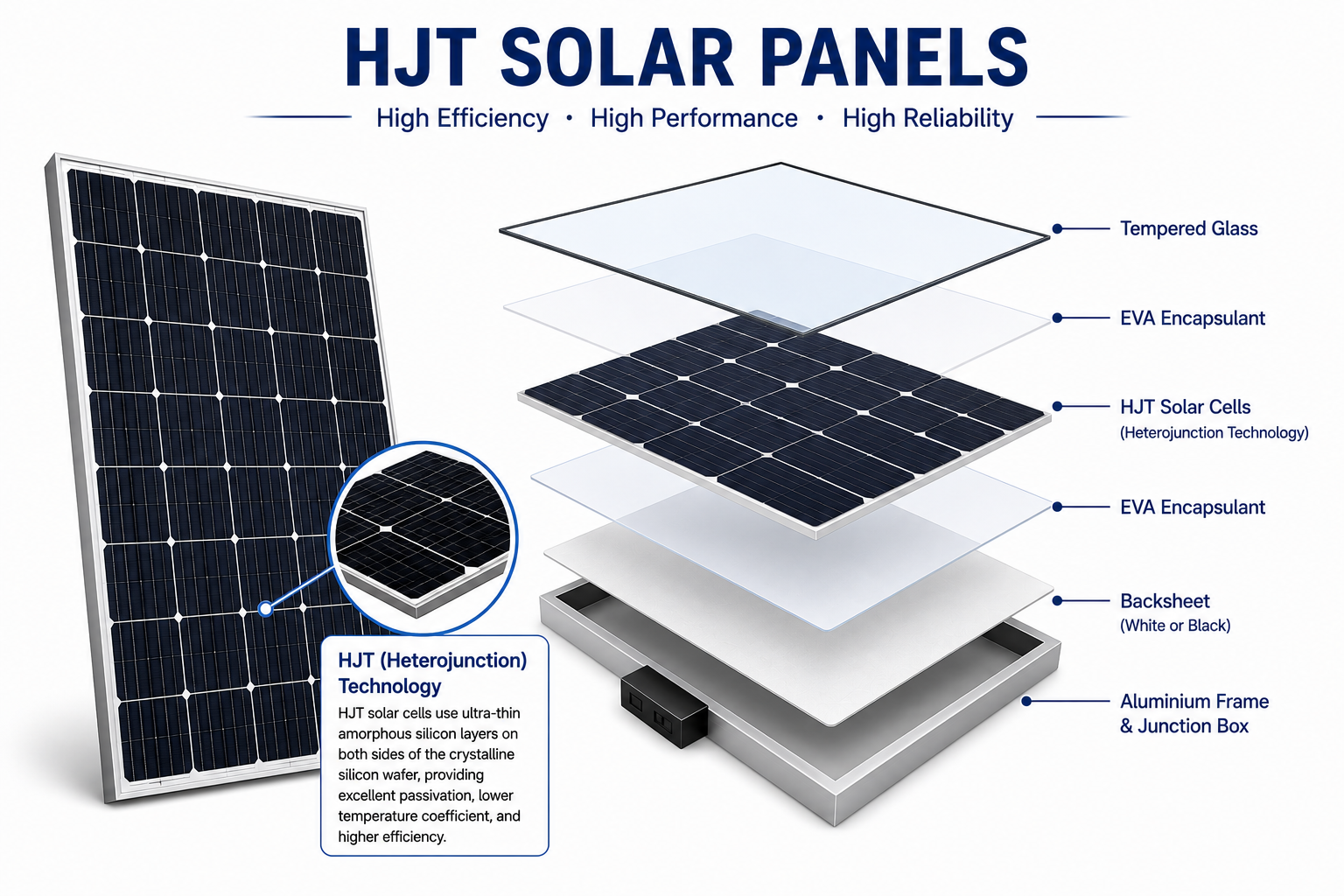
HJT stands for Heterojunction Technology.
These premium first-generation solar panels combine crystalline silicon with thin amorphous silicon layers to improve efficiency and temperature performance.
HJT is considered one of the most advanced residential solar technologies currently available.
HJT stands for Heterojunction Technology.
These premium first-generation solar panels combine crystalline silicon with thin amorphous silicon layers to improve efficiency and temperature performance.
HJT is considered one of the most advanced residential solar technologies currently available.
Benefits of HJT Solar Panels
- Excellent efficiency
- Superior heat resistance
- Very low degradation
- Better electricity generation
- Excellent performance during extreme summers
- Longer operational lifespan
One of the biggest advantages of HJT first-generation solar panels is their ability to maintain strong performance during very high temperatures.
This makes them ideal for Indian climate conditions, where rooftop heat can become extremely intense during summer.
Best For
- Premium residential rooftops
- Luxury homes
- High summer temperature regions
- Maximum long-term performance
Mono PERC vs TOPCon vs HJT Solar Panels
| Technology | Efficiency | Best For | Market Position |
|---|---|---|---|
| Mono PERC | 20%–22% | Budget + performance | Most common |
| TOPCon | 21%–23% | Long-term savings | Fast-growing |
| HJT | 22%–24% | Premium performance | Premium segment |
Quick Recommendation
Choose Mono PERC if:
- You want affordable rooftop solar
- Your electricity usage is moderate
- You want strong value for money
Choose TOPCon if:
- You want better long-term savings
- Your rooftop gets extreme sunlight
- You want lower degradation over time
Choose HJT if:
- You want premium solar technology
- Your priority is maximum efficiency
- You want the best heat resistance possible
Which First-Generation Solar Panels Are Best for Indian Homes?
The best first-generation solar panels depend on:
- Roof size
- Budget
- Electricity consumption
- Climate conditions
- Long-term savings goals
For most Indian homes:
Best Budget-Friendly Option
Mono PERC solar panels
Best Overall Long-Term Investment
TOPCon solar panels
Best Premium Solar Technology
HJT solar panels
Best for Small Rooftops
TOPCon or HJT panels
Best for Indian Summer Heat
HJT solar panels
Real-World Example
Suppose a homeowner has:
- A 3BHK house
- 2 air conditioners
- Refrigerator
- Washing machine
- Water motor
- TVs and kitchen appliances
In this situation:
- Mono PERC offers strong savings at lower cost
- TOPCon delivers better long-term efficiency
- HJT provides premium summer performance
If rooftop space is limited, higher-efficiency first-generation solar panels like TOPCon and HJT usually make more sense.
Lifespan of First-Generation Solar Panels
One of the biggest reasons homeowners trust first-generation solar panels is their long lifespan.
Most premium rooftop solar panels today come with:
- 25-year performance warranty
- 10–15 year product warranty
Modern N-type first-generation solar panels like TOPCon and HJT also degrade more slowly over time, meaning they continue generating strong electricity output for decades.
With proper installation and maintenance, rooftop solar systems can reduce electricity bills for 25 years or more.
Are First-Generation Solar Panels Still Worth Buying?
Absolutely yes.
In fact, modern first-generation solar panels are currently the best option for residential rooftop solar systems in India.
Even though second-generation and third-generation technologies exist, crystalline silicon solar technology still dominates because it is:
- Proven
- Efficient
- Durable
- Reliable
- Cost-effective
- Easily available
Most rooftop solar systems installed in India today still use:
- Mono PERC
- TOPCon
- HJT
because these first-generation solar panels offer the best combination of efficiency, performance and long-term savings.
You may also read our blog about “Solar Panels for Homes in Haryana: Complete Guide to Savings, Subsidy & Installation (2026)“
Final Thoughts
Modern rooftop solar technology has improved dramatically over the last decade.
Today’s first-generation solar panels are:
- More efficient
- Better in heat
- Longer lasting
- More reliable
- Better suited for Indian weather conditions
At the same time, polycrystalline panels are slowly disappearing from the residential market because modern monocrystalline technologies now offer much better efficiency and long-term performance.
For most Indian homeowners:
- Mono PERC delivers excellent value
- TOPCon offers stronger long-term returns
- HJT provides premium performance during extreme summers
The best solar panel is not simply the cheapest one. It is the technology that gives you the best long-term savings, better electricity generation and reliable performance for the next 25–30 years.
If you are planning to install rooftop solar, choosing the right first-generation solar panels can make a massive difference in your electricity savings and long-term energy independence.