
Solar Systems For Your Home: A Guide To Picking The Right One
Let me tell you something: I’ve watched my neighbor argue with his electricity bill for the last three months like it was a personal enemy. The meter reading keeps climbing, the wallet keeps thinning, and the AC? Well, that’s become a luxury reserved for guests and festivals.
Sound familiar?
Here’s the thing about installing a solar system for your home in India right now — it’s not just trendy or “eco-conscious” anymore. It’s actually smart money. And in Haryana, with rising electricity costs and increasing awareness around rooftop solar, more homeowners are now switching to solar systems connected through DHBVN net metering benefits.
But without doing your homework first, you might end up with a system that doesn’t quite fit your needs, and that’s an investment you’ll be looking at on your roof for the next 25 years.
So let’s cut through the marketing speak and figure out which type of solar system for your home actually makes sense for your situation.
Quick note: Costs, savings, subsidy approvals, and payback periods can vary based on your city, roof direction, electricity usage, and DHBVN policies. Always get a site assessment from a certified solar installer before making a final decision.
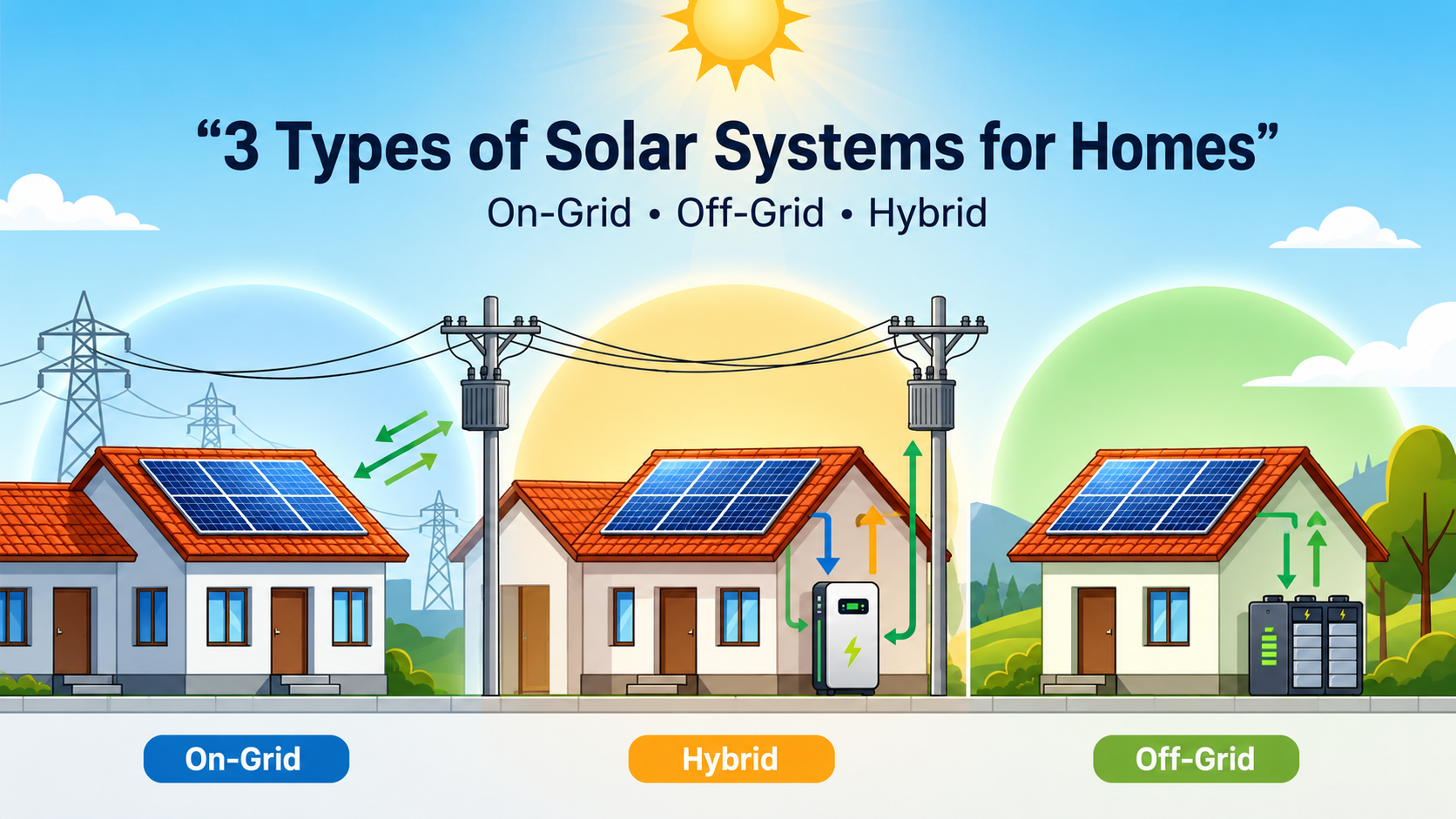
The Three Main Players: Understanding Solar System Types For Houses
Think of residential solar systems like smartphones. Everyone needs one, but the iPhone guy, the Samsung loyalist, and the budget-
conscious Xiaomi user all have different priorities. Same logic applies here.
Insert image of three solar system types side-by-side comparison here
1. On-Grid Solar System (The Bill Slayer)
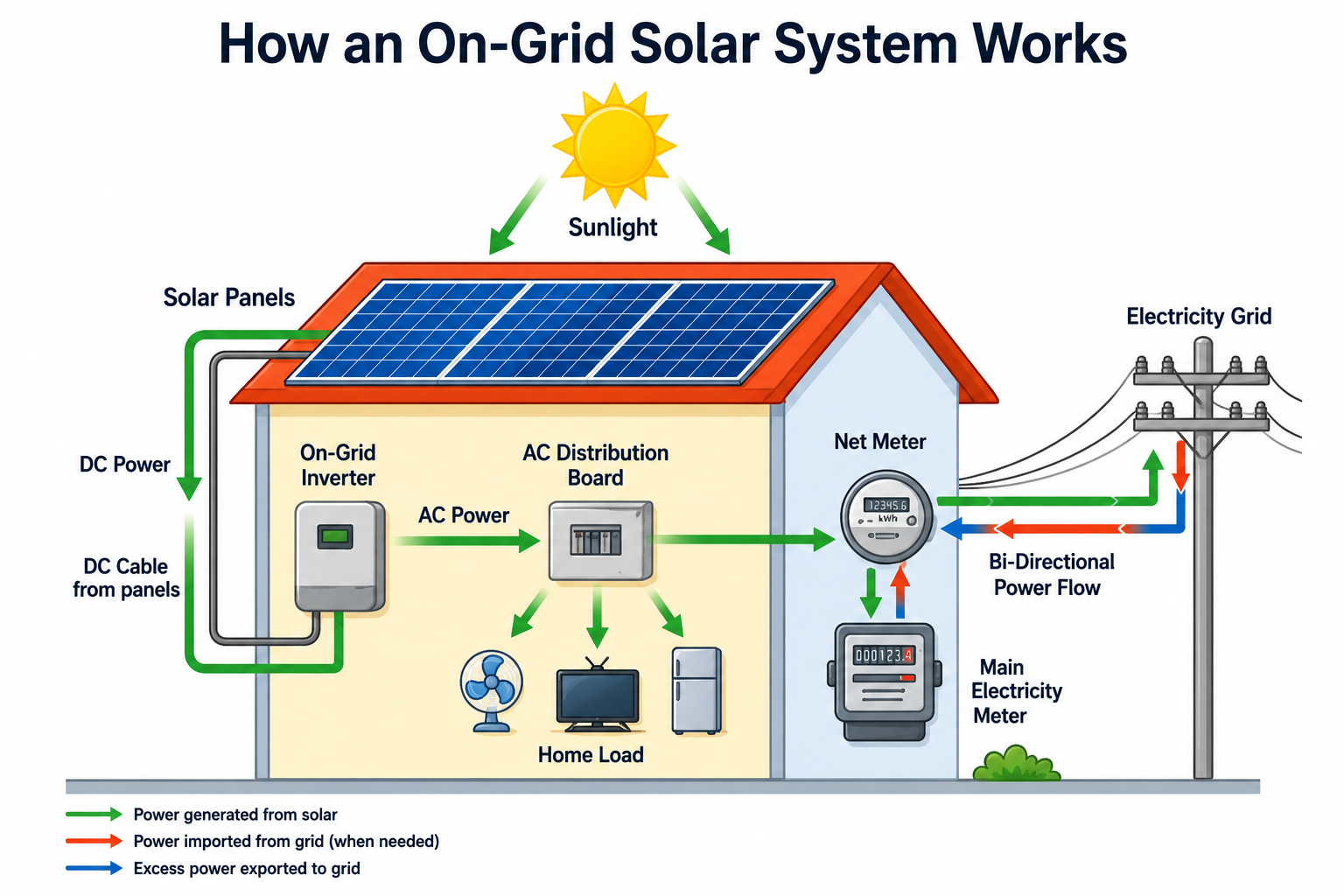
This is your grid-tied setup panels on the roof, inverter in the utility room, and a direct connection to your local electricity board. No
batteries, no drama.
How it works: Your panels generate power during the day. Whatever you don’t use immediately gets sent back to the grid, and your
meter literally runs backward (net metering). At night or on cloudy days, you pull from the grid like normal.
The good stuff:
. Lowest upfront cost among all solar system types
. Fastest ROI – often around 3-5 years in many Indian cities, depending on usage, subsidies, and electricity rates
. Net metering can actually earn you credits on your bill
. Minimal maintenance headaches
The catch:
. When the grid goes down, your solar system goes down too (safety feature, not a bug)
. No backup power during those occasional load-shedding sessions
. You’re still connected to your electricity provider
Best for: Urban homes with reliable grid supply, cost-conscious folks who want to slash their electricity bills without the battery
investment.
2. Off-Grid Solar System (The Independent Republic)
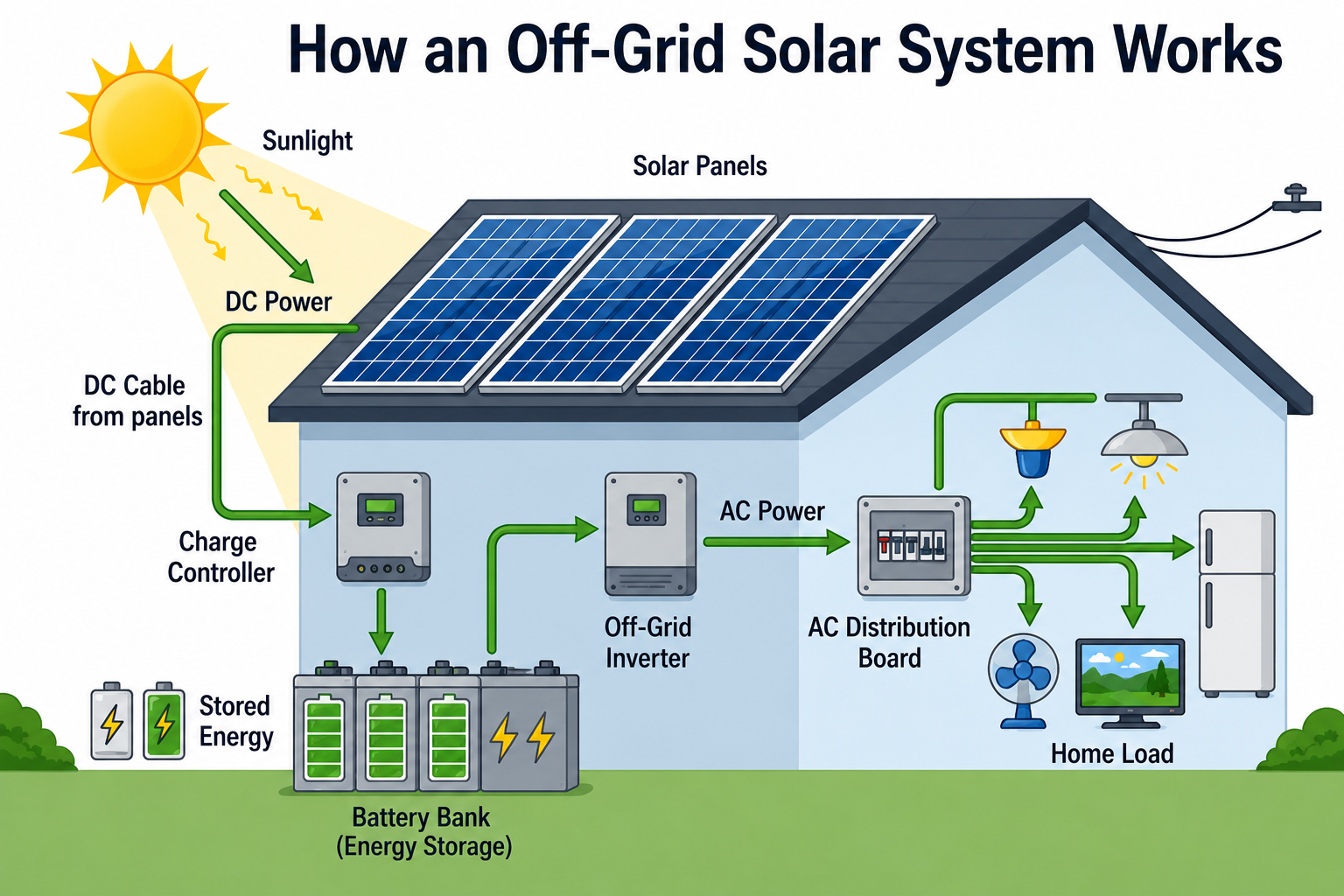
This is the full energy independence approach for your home becomes its own little power plant with panels, batteries, and a charge
controller running the show.
How it works: Solar panels charge your battery bank during the day. Your home runs entirely off these batteries 24/7. The grid? You’ve
basically separated from it.
The good stuff:
. Total independence from power cuts and grid failures
. Perfect for remote areas with unreliable or no grid access
. You’re protected from electricity rate hikes
. Genuine bragging rights at dinner parties
The catch:
. Highest upfront cost (those batteries aren’t cheap)
. Battery replacement every 5-10 years is a real expense
. Requires careful load management – you’ll want to be mindful of high-power appliance usage
. More complex maintenance
Best for: Rural areas, farmhouses, locations with frequent blackouts, or anyone who wants complete energy autonomy (and has the
budget for it).
3. Hybrid Solar System (The Best Of Both Worlds)
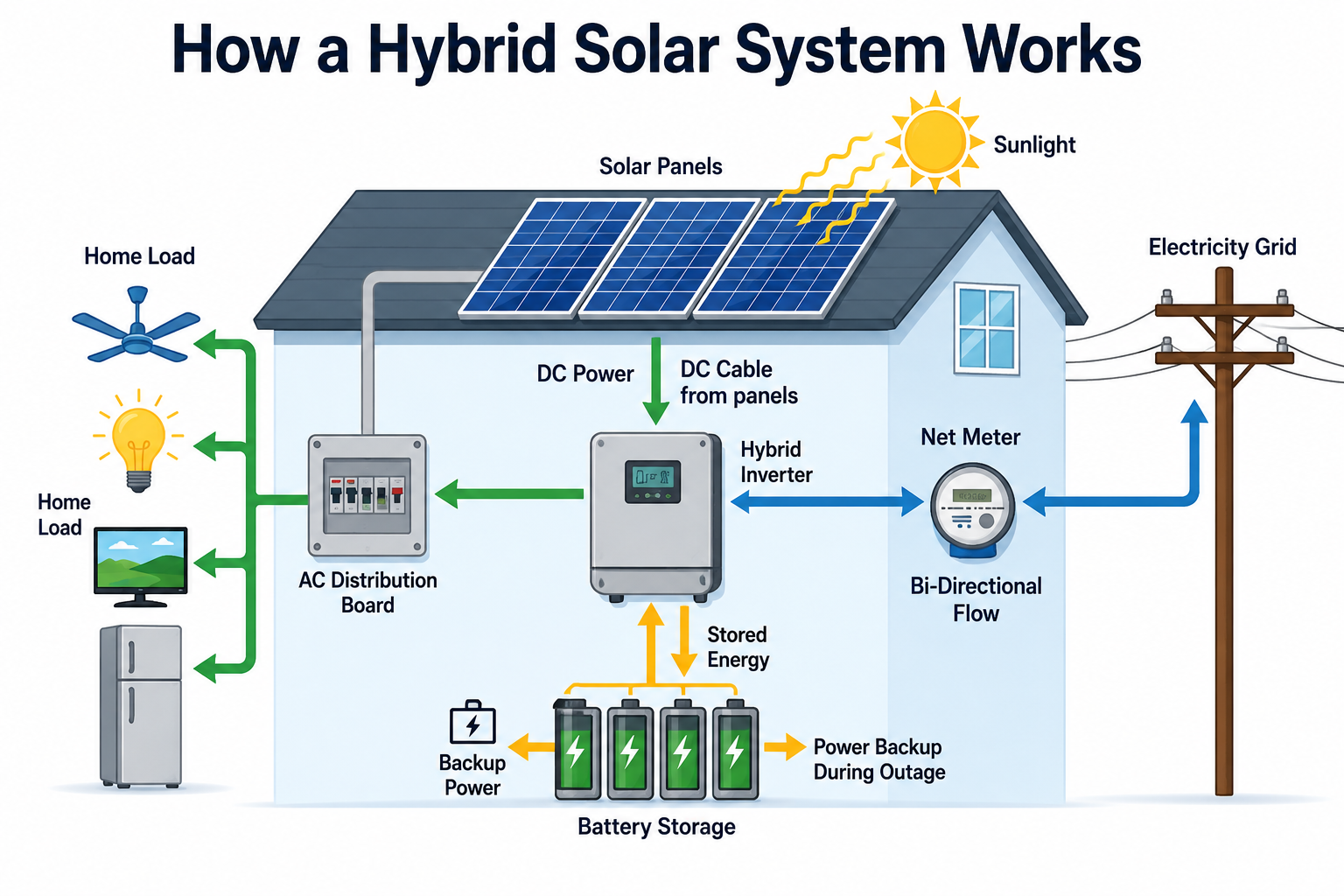
Think of this as the diplomatic solution. You get panels, batteries and grid connection. It’s the Swiss Army knife of residential solar
system guide options.
How it works: Panels charge batteries first, power your home second, and send excess to the grid third. When batteries run low, the
grid automatically kicks in. When the grid fails, your batteries have your back.
The good stuff:
. Backup power during outages
. Net metering benefits when available
. Grid as your safety net
. Optimized power usage across all sources
The catch:
. More expensive than on-grid (but cheaper than off-grid)
. Slightly more complex installation
. You’re paying for batteries you might not always use
Best for: Indian homes wanting bill savings plus power backup, areas with inconsistent grid supply, growing families planning ahead.
Insert comparison table here
On-Grid Vs Off-Grid Solar System: The Real Talk
| Factor | On-Grid | Off-Grid | Hybrid |
|---|---|---|---|
| Initial Cost | ₹40,000–60,000/kW | ₹80,000–1,20,000/kW | ₹60,000–90,000/kW |
| Power Backup | None | Complete | Yes (limited by battery) |
| Grid Dependency | Full | Zero | Partial |
| Net Metering | Yes | No | Yes |
| Best ROI | 3–5 years depending on usage and subsidies | 7–10 years depending on batteries | 5–7 years depending on battery usage |
| Maintenance | Low | Medium | Medium |
Which Solar System Is Best For Indian Homes? (The Million-Rupee Question)
Here’s where I get practical with you.
Choose On-Grid if:
. You’re in a city with 20+ hours of daily grid supply
. Your primary goal is reducing electricity bills
. You’re comfortable during the occasional 2-hour power cut
. Budget is your main constraint
. You qualify for net metering in your state
Choose Hybrid if:
. You experience 3-8 hours of daily load-shedding
. You have medical equipment stored
. You want backup without completely separating from the grid
. You can swing the mid-range investment
Choose Off-Grid if:
. Grid supply is inconsistent or unavailable in your area
. You’re setting up a farmhouse or weekend home
. Complete energy independence is your actual goal
. You have the budget and roof space for adequate battery backup
. You’re comfortable with actively managing your power consumption
What Size Solar System Does A House Need?
This isn’t one-size-fits-all territory. Your consumption pattern matters more than your neighbor’s setup.
Quick sizing guide:
Small homes (1-2 BHK, monthly bill ₹2,000-4,000):
. 1-3 kW system
. Covers basics: lights, fans, TV, fridge, occasional AC
· Roof space needed: 100-300 sq ft
Medium homes (2-3 BHK, monthly bill ₹4,000-8,000):
· 3-5 kW system
. Handles regular AC use, washing machine, full appliances
. Roof space needed: 300-500 sq ft
Large homes (3+ BHK, monthly bill ₹8,000+):
· 5-10 kW system
. Multiple ACs, all appliances, high consumption
. Roof space needed: 500-1,000 sq ft
Pro tip: Check your last 6 months’ electricity bills. Calculate average monthly units. A 1 kW system typically generates roughly 4-5 units
daily in most Indian cities (varies by location and season).
Most certified installers calculate system size using your last 6-12 months of electricity consumption to give a more accurate
recommendation.
The Battery Question: Do I Need One?
Short answer: Only if you want backup power.
Longer answer: On-grid solar system benefits for house are fantastic without batteries if your grid is reliable. You save money upfront
and still reduce your bills through net metering.
But if you’re in an area where the power situation is less predictable, then yes, hybrid solar system with battery for home becomes
worth every rupee. You’re essentially buying peace of mind.
Battery backup needs vary widely depending on how many appliances you want to run during outages, so sizing should always be
planned with a professional.
Battery types worth knowing:
. Lead-acid: Cheaper, proven tech, shorter lifespan (3-5 years)
. Lithium-ion: Expensive, longer life (7-10 years), better efficiency.
Real Talk: Maintenance And Lifespan
Solar panels: These are built to last. 25+ years with minimal degradation (usually under 0.7% annually). Just keep them clean.
Inverters: The component that typically needs attention first. Expect 8-12 years, then replacement. Budget ₹15,000-40,000 depending
on capacity.
Batteries: 5-10 years depending on type and usage. This is your recurring cost in hybrid/off-grid setups.
Actual maintenance:
. Panel cleaning: 4 times yearly (6 if you’re near construction or highways)
. Visual inspection: Quarterly
· Professional checkup: Annual
. Bird netting: One-time investment worth considering
The ROI Reality Check
Which solar system gives the fastest ROI? On-grid typically wins this race.
Typical payback periods in India:
. On-grid: Often around 3-5 years in many Indian cities, depending on usage, subsidies, and electricity rates
. Hybrid: Often around 5-7 years depending on battery usage and local power costs
. Off-grid: Usually longer payback, often 7-10 years depending on system size and battery needs
After payback, you’re essentially getting free electricity for the next 15-20 years. That’s where the real value adds up.
Common Mistakes I've Seen People Make
1. Oversizing: Bigger isn’t always better. Match your actual consumption.
2. Ignoring roof condition: Addressing roof issues after panel installation can be more challenging and costly.
3. Going with the lowest quote: The ₹30,000/kW installer might be cutting corners on quality or service.
4. Wrong inverter type: Make sure it matches your system type. Hybrid inverters cost more but give you flexibility.
5. Not reviewing warranties carefully: Check what’s actually covered and for how long.
You may also read our blog “First-Generation Solar Panels: The Technology That Built the Modern Solar Industry“
The Bottom Line
Solar system types for houses aren’t complicated once you strip away the jargon. You’re essentially choosing between three
philosophies: grid-dependent savings (on-grid), complete independence (off-grid), or having your cake and eating it too (hybrid).
The “best” system is the one that matches your actual situation and not the fanciest one or the cheapest one, but the one that solves
your specific power needs.
Before choosing any system, it’s always wise to compare quotes from multiple certified vendors and verify warranties, service
support, and installation experience.
Your move. That electricity bill isn’t going to solve itself.
DISCLAIMER
The information provided in this article is intended for general educational purposes only. Solar system costs, savings estimates, payback periods, and subsidy availability vary based on your location, roof orientation, electricity consumption patterns, local DISCOM policies, and the specific products chosen. The figures mentioned in this article are approximate and based on general market data at the time of writing and they should not be taken as a guaranteed outcome for your specific situation.

AMT Energy recommends getting a professional site assessment and a detailed proposal from a certified solar installer before making any purchase decision. Net metering eligibility, government subsidies, and state-level policies are subject to change, always verify current applicable rules with your local electricity board or a qualified installer.

This article does not constitute financial, legal, or technical advice. AMT Energy is not responsible for decisions made solely on the basis of the information presented here.

For an accurate assessment tailored to your home, contact AMT Energy directly.